What happens when the phone goes back in their hand?Attention literacy and digital wellbeing for schools, built on metacognition and self-regulation.
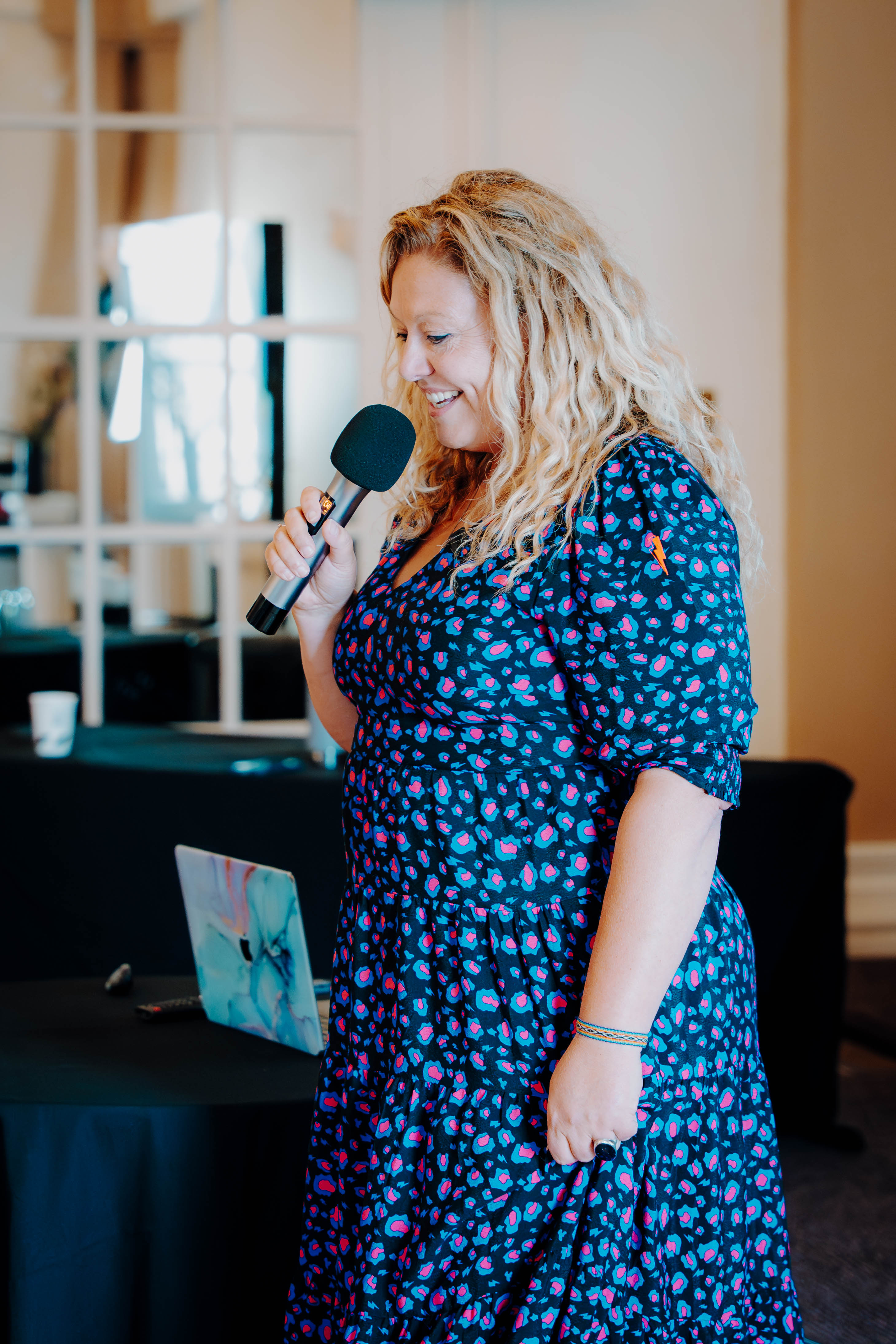
I'm Katie Brockhurst. I've spent twenty five years working inside social media, and now I'm in schools teaching what I know about how it is designed and what we can do about it.
A phone ban works inside school. A national ban on social media for under-16s is expected from spring 2027. Neither one builds the skill a pupil needs when the phone is back in their hand.
“As a teenager I find this really useful. Scroll loop notice choose is now my way of recognising when I am in a scroll loop or been on my phone for a long time.”
Research commissioned by government and carried out by Savanta, a month-long pilot with 309 families, found that a clear external boundary shifted behaviour more reliably than awareness alone, and that the boundary was hardest to hold where phones mattered socially. Its conclusion was that technical controls on their own are not enough, and that parents wanted restrictions paired with practical guidance on media literacy, algorithms and AI, with schools seen as the place to deliver it.
Young people are not naive about any of this. They describe social media as something they love and hate at once, and most say they are working it out on their own. They understand and experience the problems of social media, and want help building the skills to navigate.
Social media restriction pilots: qualitative research with 13 to 17-year-olds in the UK. Savanta for the Department for Science, Innovation and Technology, July 2026. Read the research
‘I love it, but I hate it’: Young people’s experiences and expectations of growing up digital. Ada Lovelace Institute and Nuffield Foundation, 2026. Read the research
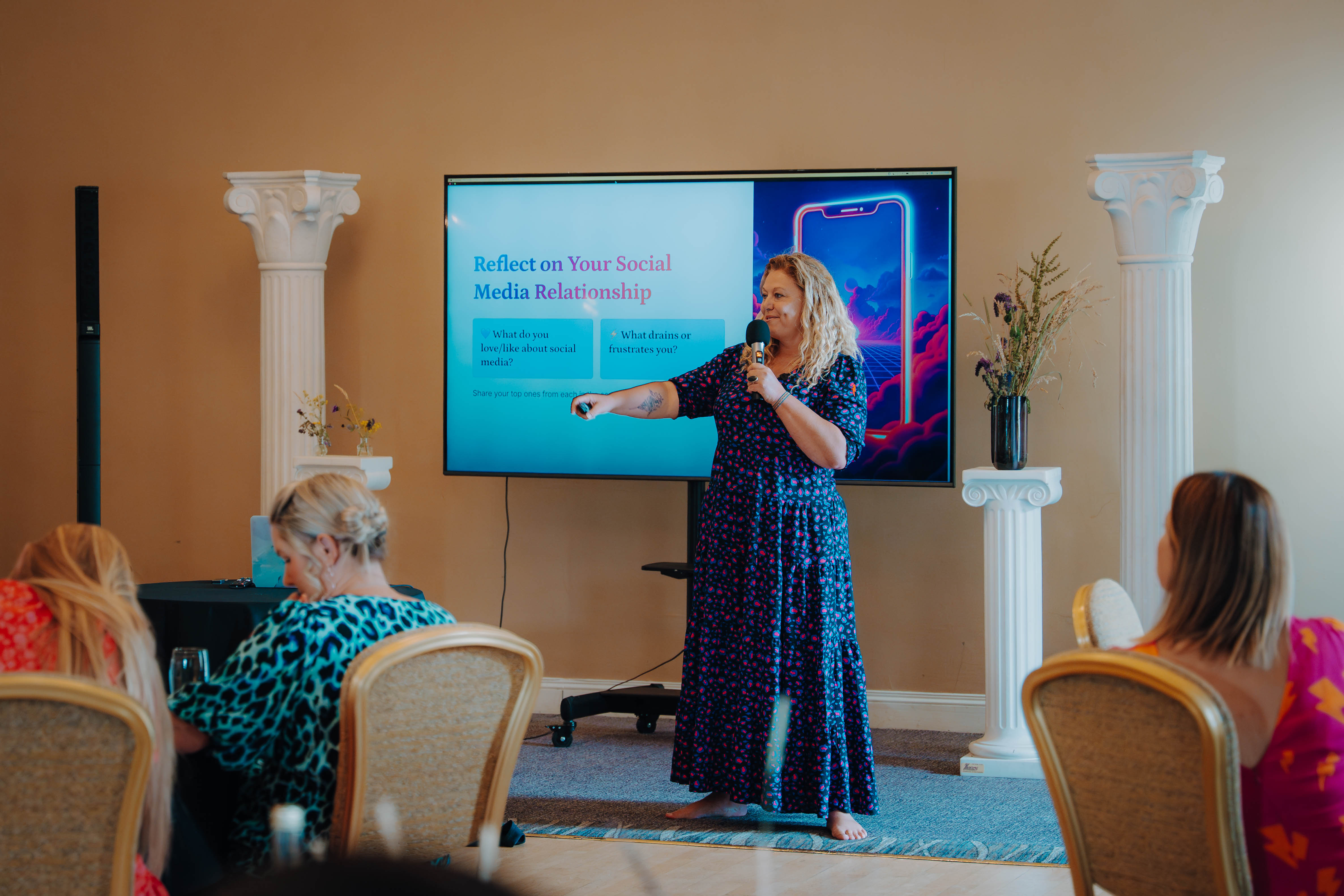
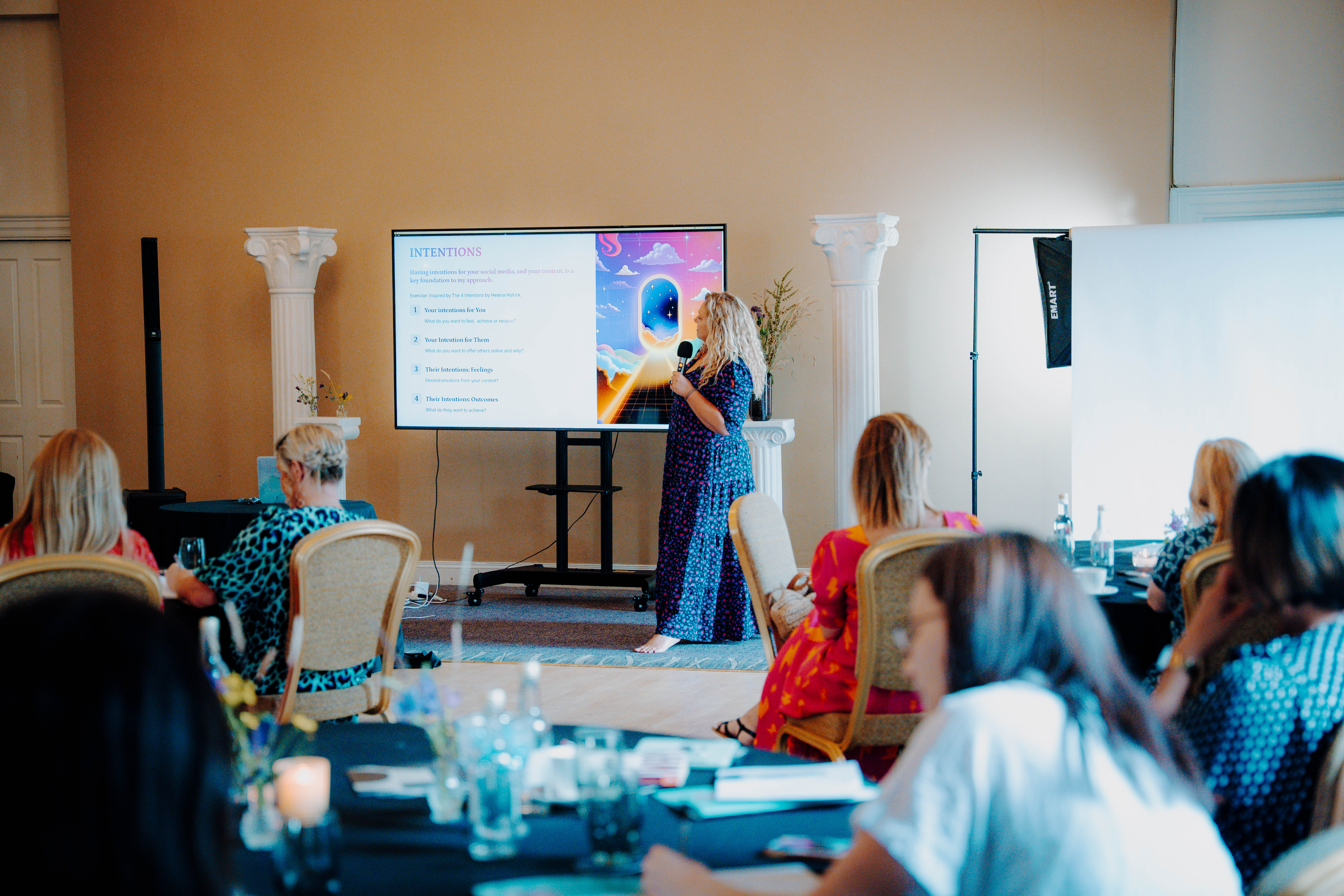
What happens in the session
Catching yourself mid-scroll, and choosing what happens next. Noticing is metacognition, choosing is self-regulation, and the EEF recommends both for developing independent learners. I've pointed that methodology at teaching about attention and digital wellbeing.
We start with what we love, and what we don't, about our phones and social media, because both are true. A game of Scroll Loop Bingo surfaces the reasons we pick the phone up. We look at how Scroll Loops happen, how the apps are designed to keep us there, and the business models behind social media and now AI.
We talk about how it all makes us feel and what already helps, then practise the sequence, Scroll Loop Notice Choose, so everyone leaves with one thing they're going to try.
Then a review a week later, so the practice has a chance to stick. More on that below.
2The seven day experiment reviewA week later, everyone fills in a five minute review: what they tried, what worked, what did nothing, and what they would keep. Either digitally or on a print out to suit.
3What you are left withSomething you can take to SLT or parents as evidence that the session did something, and it also delivers the evaluation aspect, as it applies for metacognition and self regulation.
Invite me to your school
Assemblies and workshops
Years 7 to 13 · 30 to 60 minutes
Pupils learn about Scroll Loops, how to notice when they are in one, and what to choose and try when they do. Whole school, a single year group, or a smaller workshop where there's time to go deeper.
A whole day
Years 7 to 13 · one day
An assembly to open, then workshops through the day so year groups get their own session rather than one talk for everyone. Built with you around timetable and tutor time.
A digital wellbeing week
Years 7 to 13 · across a week
The same, with staff and parents brought in, so the whole community is doing the experiment together.
Staff CPD
Teachers and pastoral leads · twilight or INSET
Play Scroll Loop Bingo with me and have your teachers take part in the experiment themselves, because addictive design works on adults too. They leave with the experiment and review to run with their own class.
For PTAs and parents
Parent talks
An hour, in person or online. We look at what a scroll loop is, what pulls us into one, and practise the same four words the pupils get: Scroll, Loop, Notice, Choose. There is plenty of time to talk. Everyone leaves with a seven day experiment to run at home that week.
It works on its own, and it works well alongside a session for pupils, so home and school are saying the same thing.
What parents said
“Thank you. I really needed this.”
“Being able to speak openly has been really valuable.”
“Made me feel better about my usage and hopeful.”
In three words: grounding, safe, inspiring, useful, fun.
Everything I do in a school is built around the week: I come in, your pupils run the experiment for seven days, and we check in on what happened. That starts at £500. Adding your parents and carers and your staff is on the sheet.
Introductory rates run until March 2027, in exchange for a short case study.
I would rather be in the room than not. If you are a state school and the budget is not there, tell me and we will work something out.
“The pupils were captivated throughout and Katie posed some thought-provoking questions on this crucial issue affecting young people today.”
“Katie’s sessions were excellent. Clear, engaging and thought provoking, with imaginative active exercises. They gave learners real food for thought and inspired them to be more intentional about their use of social media. Such a valuable day!”
Gavin FowlerStrode College
Start with a free taster
Online · 30 minutes · your PSHE or pastoral team
I'll run a short session for you and your staff online, free, so you can see how I work.
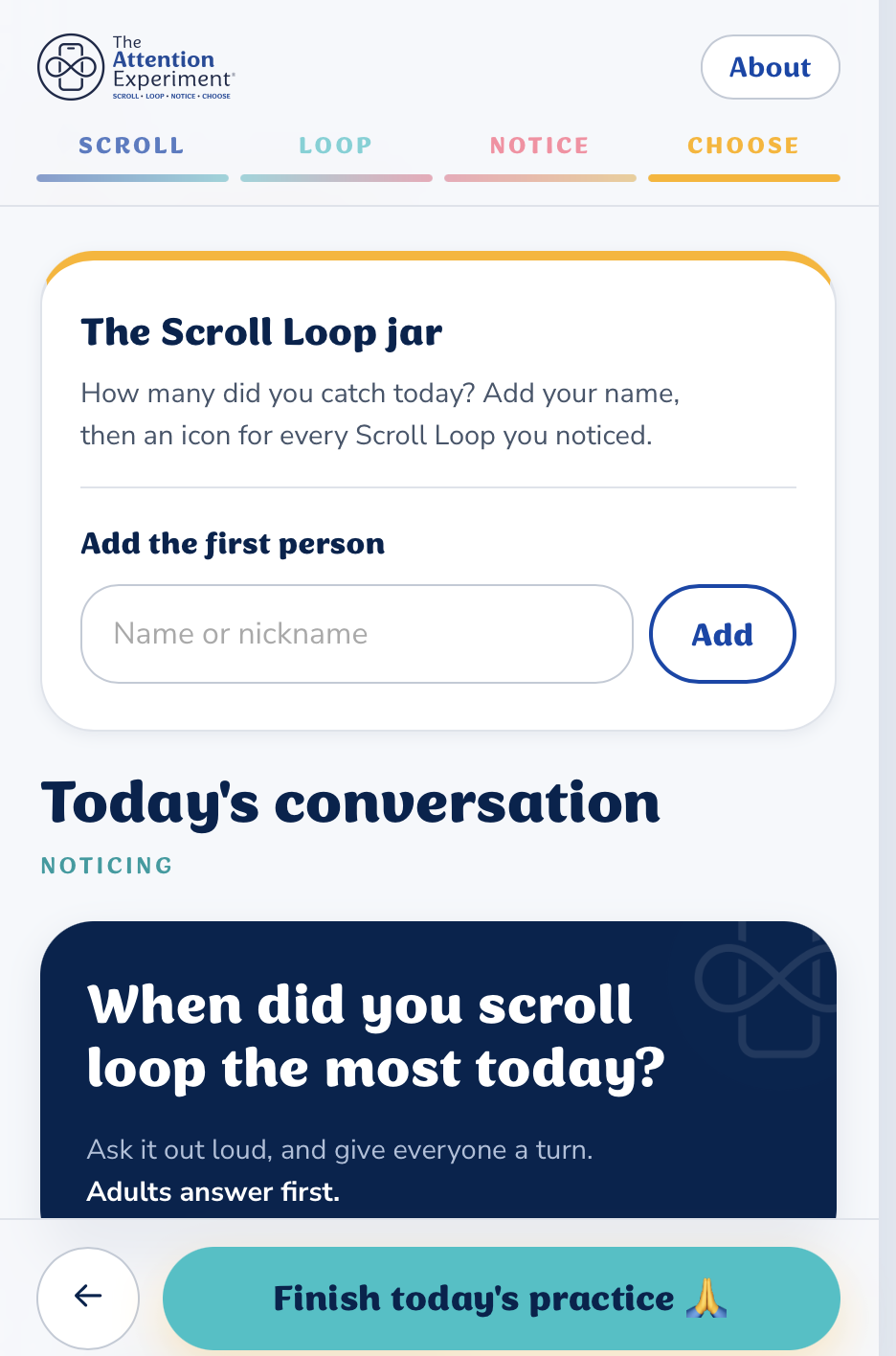
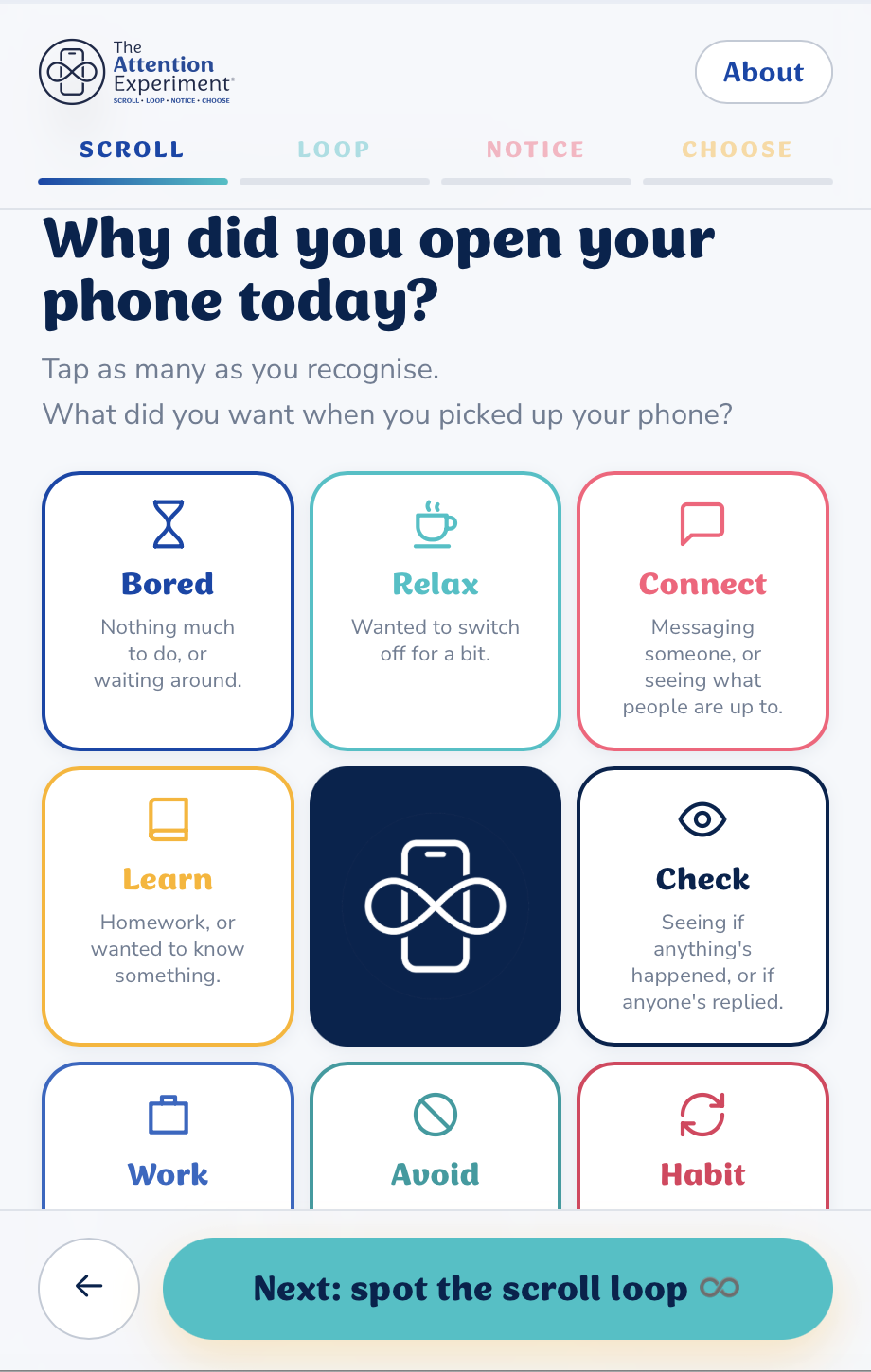
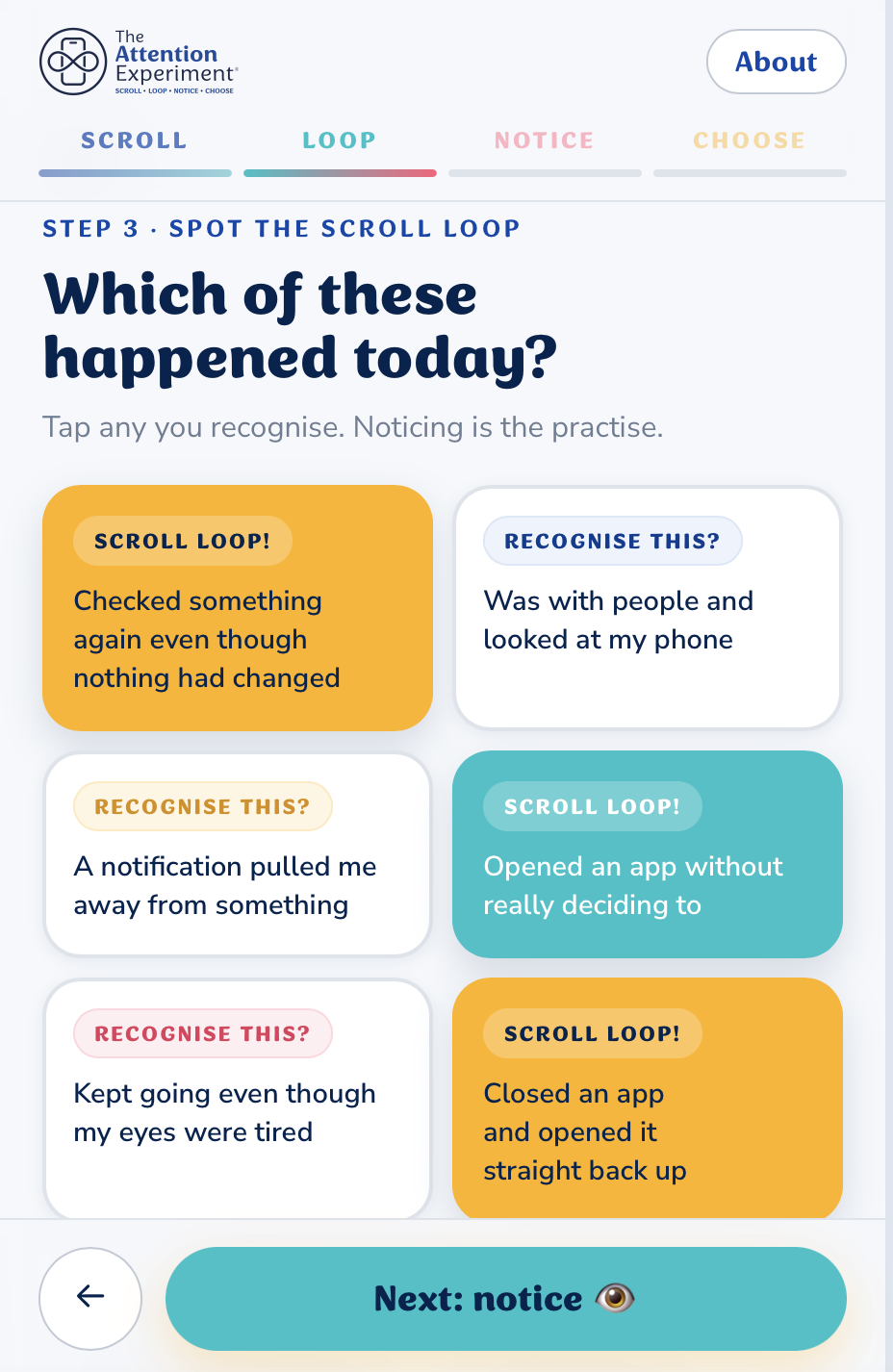
I want to help people spend less time lost in the scroll, so I have developed a free web app. No subscription, no data collected. It takes a couple of minutes a day, for seven days. If you want to know what the sessions feel like from the inside, run this yourself for a week first.
This is a family and friends version, not a classroom resource. The school sessions use the same sequence, delivered in person.
Why I do this
This is one of the biggest topics of our time, yet there seems to be very little practical support for teachers or students. Keeping up with the research is much of my working life. I want to put what I am learning into the hands of the people who need it and can use it.
Katie Brockhurst spent twenty five years working inside social media, before turning to what it's doing to our attention and wellbeing. She is a qualified Digital Wellbeing Coach (dip/ICF), trained with Europass Teacher Academy, and leads the digital team for The Common at Glastonbury Festival. Her written evidence to Parliament is published in the Government's review of AI and EdTech. She is the author of the Social Media for a New Age books, works with schools on digital wellbeing, and is the founder of The Attention Experiment.